
You can see turbidity and sometimes taste chlorine — but the contaminants that matter most are invisible. Arsenic, lead, nitrates and bacterial contamination have no colour and no taste, and all of them appear in Nepali water sources often enough that guessing is not a strategy. Here is what a proper lab test covers and how to read the results.
What a 27-parameter test measures
- Everyday measures: pH, TDS (total dissolved solids), turbidity, total hardness, alkalinity
- Minerals and metals: iron, magnesium, manganese, chloride, sulphate, sodium, potassium, copper, zinc
- Health hazards: arsenic, lead, nitrate, nitrite, fluoride, ammonia
- Treatment indicators: residual chlorine, dissolved oxygen, biochemical and chemical oxygen demand
- Bacteriological safety: coliform bacteria and E. coli
Our lab testing follows standards recognized by Nepal's government drinking-water and health science institutions, and every test ends with a written report — not just numbers, but what they mean and what (if anything) to do about them.
What is a good TDS level for drinking water?
TDS below roughly 300 mg/L generally tastes good and is considered excellent; up to 500 mg/L is acceptable for drinking. Very low TDS (under about 50, common with over-filtered RO water) tastes flat and strips beneficial minerals — which is why good RO systems include a mineralizer or TDS controller. High TDS alone is not dangerous, but it tells you dissolved solids are present and makes the metal and hazard readings worth checking.
The readings that should never be ignored
E. coli or coliform bacteria at any level means the water is being contaminated — usually a tank, pipe joint or source problem — and needs treatment before drinking. Arsenic and lead have no safe habit-forming level; if they appear, the fix is a specific filter stage matched to the reading, not a generic purifier.
How home sample collection works
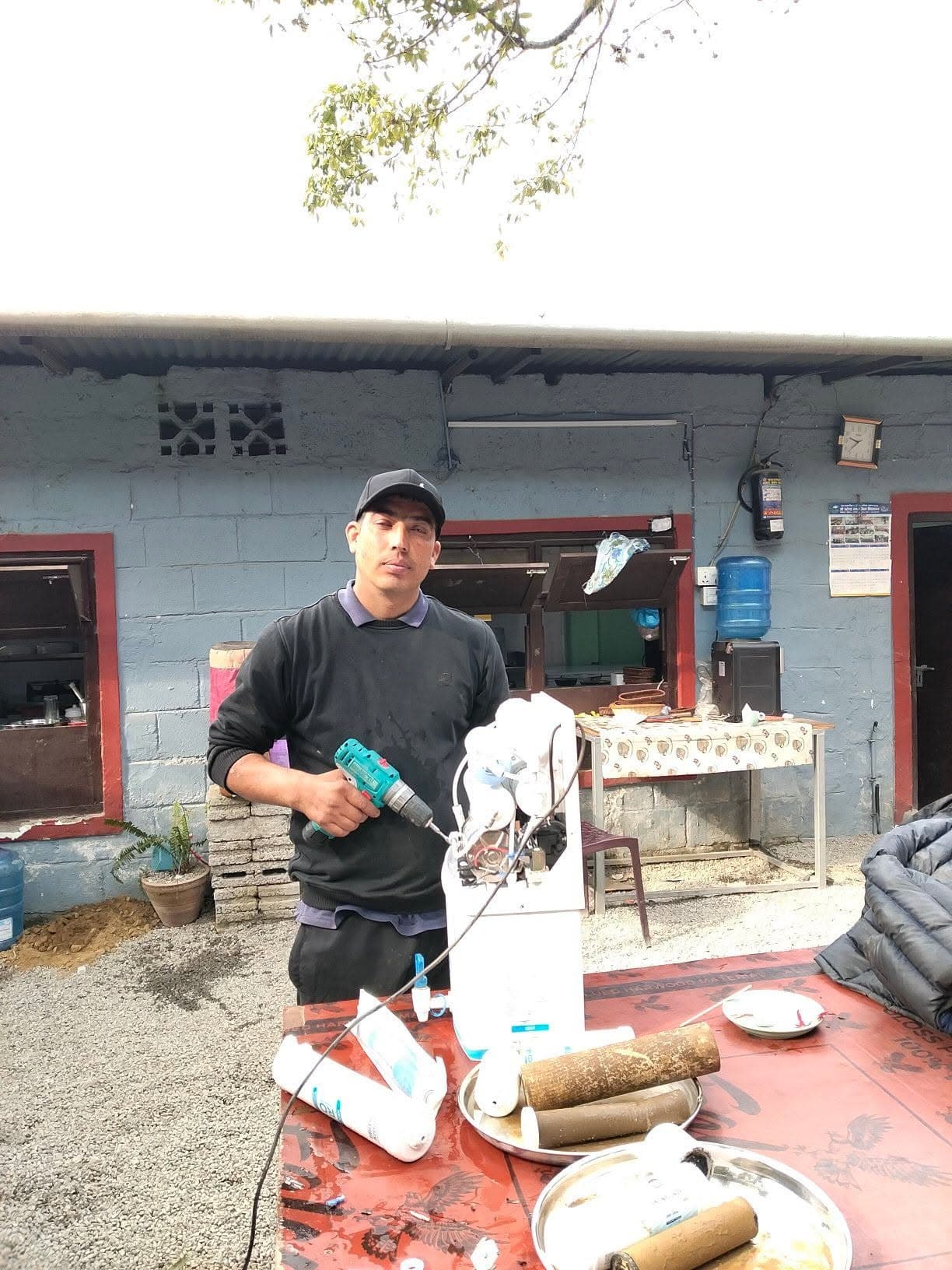
You do not bring water to us — we come to you. A technician collects the sample correctly (bacteriological samples spoil if collected wrong), runs the analysis, and returns with the written report and recommendations. If you run a hotel, restaurant or school in Pokhara, the report doubles as a document you can show customers and inspectors.
Not sure what is in your water? Book a 27-parameter test with home sample collection anywhere in Pokhara.