
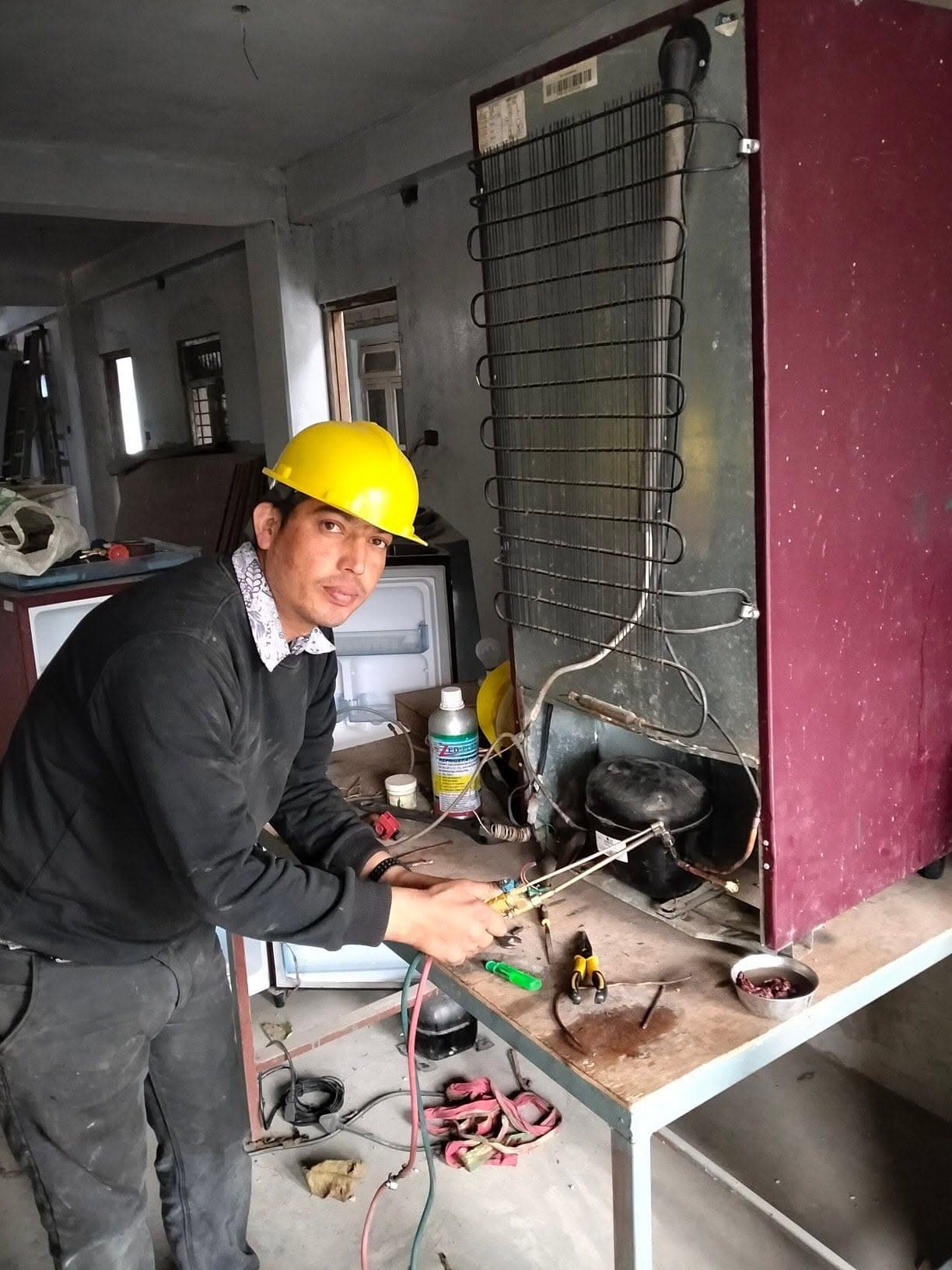
A fridge that hums but does not cool — or cools the freezer while the lower section stays warm — has a shortlist of usual suspects. Some cost nothing to fix. Here is how we approach it on a home visit, and what honest gas charging actually involves.
Check these before calling anyone
- Thermostat knob turned to its lowest setting (it happens more than you would think, especially with children around)
- Blocked airflow: an overpacked fridge or food pushed against the internal vents
- Door seal: close the door on a piece of paper — if it slides out easily along any edge, the gasket leaks warm air in
- Dusty condenser coils at the back — unplug and brush them clean; dust makes the compressor run hot and cool poorly
Frost patterns tell the story
A technician reads the evaporator like a chart: a full, even frost line means the sealed system is healthy and the fault is electrical (thermostat, relay, defrost timer, fan). A short or partial frost line usually means low refrigerant — which always means a leak, because gas does not get used up on its own.
What honest gas charging involves
Topping up gas without fixing the leak is throwing money away — it will leak out again. Proper service means finding the leak, brazing it shut, pulling a vacuum on the system, charging the correct weight of the correct refrigerant, and then verifying the temperatures actually reached. That is the full procedure we follow on home visits, and why our gas charges last.
When the compressor itself has failed
Clicking sounds followed by silence, a compressor too hot to touch, or a tripping breaker point to the compressor or its relay. Relays are cheap; compressors are the biggest fridge repair but still far below the cost of a new refrigerator. We supply and fit compressors — including on commercial freezers — with the same braze-vacuum-charge-verify procedure.
Fridge still warm after the checks above? We repair refrigerators and freezers of all brands at your home in Pokhara — usually in a single visit.