
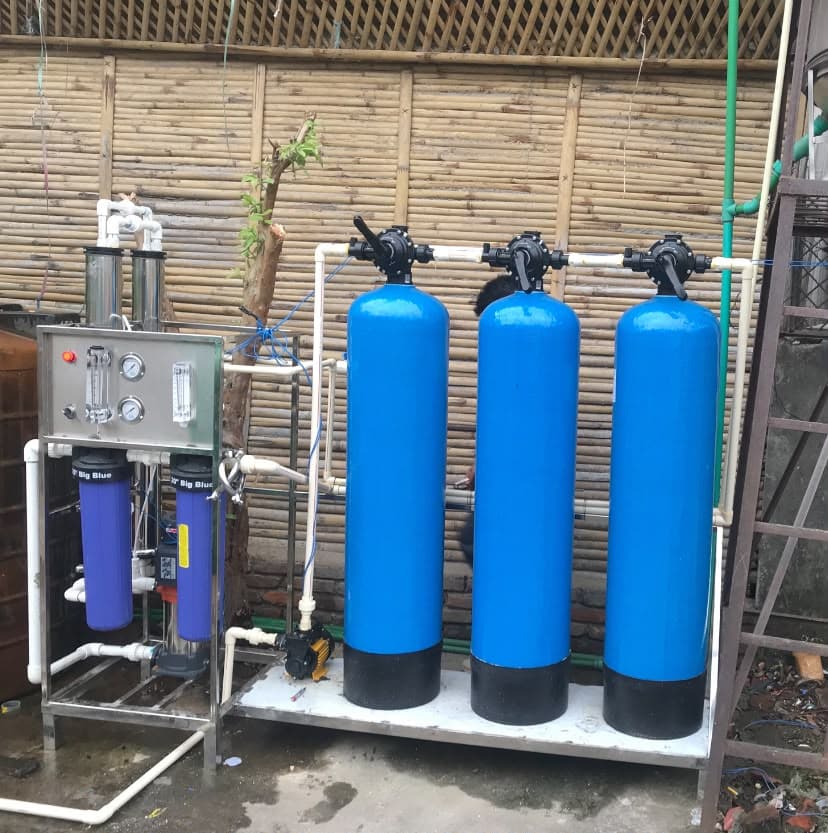
Jar water and commercial RO are steady businesses in Nepal — demand does not fluctuate with fashion. But we have serviced enough plants across the Pokhara region to know exactly where new operators lose money: wrong capacity on day one, and no maintenance discipline after month six. This guide covers what we tell every client who asks us to design a plant.
Start with the water, not the machine
Two boring holes 500 metres apart can produce completely different water. Before sizing anything, test the source — TDS, hardness, iron and bacteriology at minimum. The results decide the pre-treatment train: high hardness needs a softener vessel, iron needs specific media, turbid water needs serious sediment stages. Plants designed without a source test get expensive surprises.
Choosing capacity: 150 LPH or a full line?
- 150 LPH compact purifiers: right for offices, schools, restaurants and small jar operations — low investment, small footprint, single-phase power
- 500–1000 LPH multi-stage plants: for serious jar businesses and housing projects — FRP vessels (sand, carbon, softener), high-pressure pump, membrane bank and storage integration
- Rule of thumb: size for your realistic year-two demand, not your opening-week optimism — but leave pipe and platform space to add capacity
The maintenance schedule that keeps plants profitable
A commercial plant is a running machine, not furniture. Sediment stages need frequent attention, carbon and softener media have service lives, membranes need TDS monitoring to catch fouling early, and pumps need pressure checks. Our maintenance contracts cover scheduled visits with logged TDS readings — the same measurement-first approach we use on home purifiers, scaled up. Plants that skip this run fine for a year, then fail expensively.
Training and mentorship matter more than brochures
The operator who runs the plant daily determines its lifespan. We train operators on flushing routines, reading the gauges, and knowing when a number means it is time to call the technician. For new entrants we also provide business-side consulting: realistic capacity planning, equipment sourcing at dealer prices, and what your running costs will actually look like.
Planning a water business or upgrading an existing plant? Send us your source details and target capacity on WhatsApp — we design, install and maintain RO plants across the Pokhara region.